
What Is a Wexford County Court Docket
A docket is the court's schedule of case events. It lists which cases are set for a given day, the type of hearing, and the time each one is called. In everyday use, people also mean the register of actions, which is the chronological list of everything that has happened in a single case. Both senses share one idea. A docket tracks what a case is doing and when it is next in court.
The docket is not the full case file. The file holds the actual documents, such as complaints, motions, orders, and judgments. The docket only points to those events by date and short label. Reading the docket tells you a hearing is set for Tuesday at 2:00 p.m. Reading the file tells you what each motion argued and how the judge ruled. The distinction matters when you decide whether a quick lookup will do or whether you need to visit the courthouse in Cadillac.
- Docket
- A schedule or register of case events and hearings.
- Register of actions
- A chronological case-event list, which is often what public online case search shows.
- Disposition
- The final or current outcome of a charge or case.
How to Find Wexford County Dockets Online
The statewide search tool for trial-court cases is MiCOURT Case Search, and Wexford County links its top-navigation "Record Search" to it. Depending on the court, MiCOURT can surface civil, traffic, criminal, domestic and family, and probate cases. The official developer documentation explains that Case Search looks up cases in a court by case number or participant name, using the parameters caseNumber, firstName, and lastName. Case-number searches find any case that contains the value you type, while name searches match participant names that begin with what you enter.
- Open MiCOURT Case Search in your browser.
- Select the court you want, so that Wexford County's 28th Circuit, 84th District, or Probate Court is included where available.
- Enter a case number, or type a last name and first name to search by participant.
- Review the returned register of actions to see filings, scheduled hearings, and the current status.
Details of the MiCOURT search parameters are published in the state's developer materials, shown below.
The official MiCOURT Case Search API documentation spells out how the public tool matches case numbers and names.
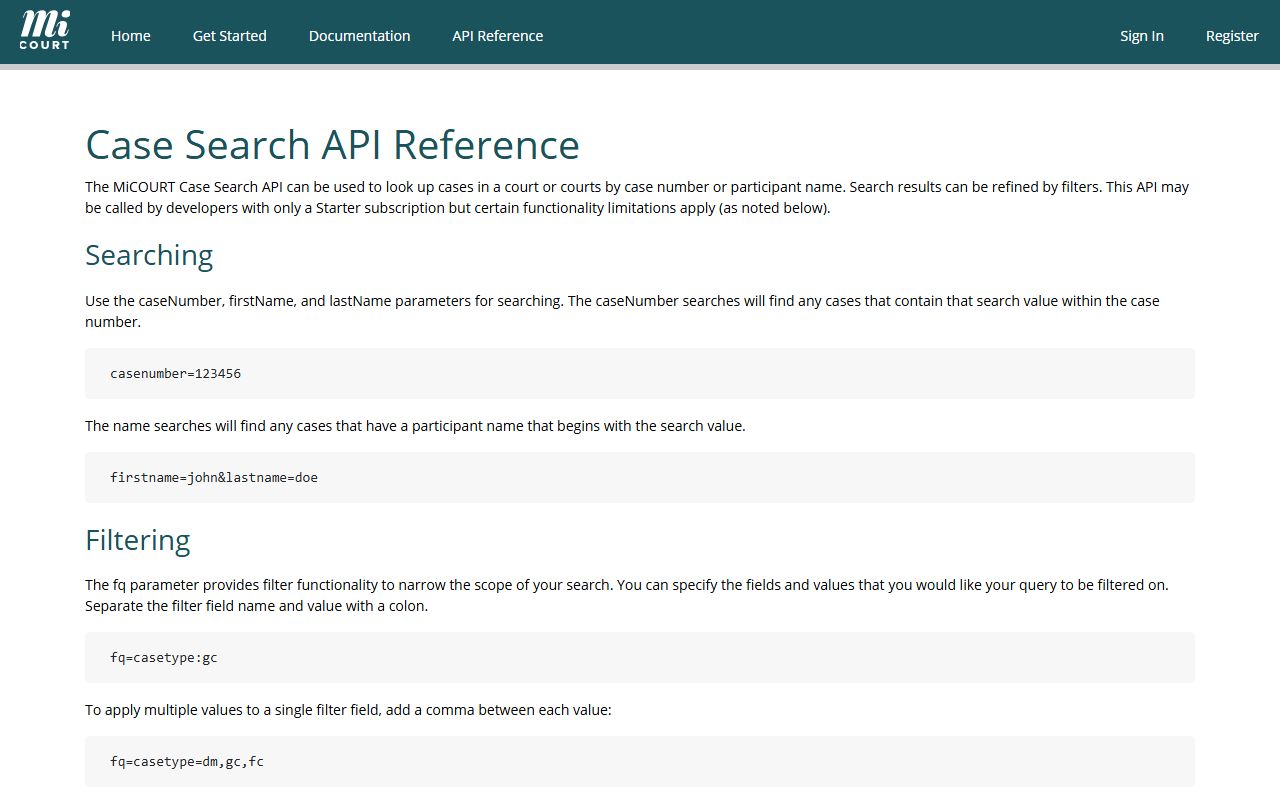
That documentation confirms why a partial name or number can still pull the right Wexford County docket, since the system searches on a contains or begins-with basis rather than requiring an exact match.
What a Wexford County Docket Entry Shows
The 84th District Court posts a public docket that reads as a dense schedule rather than a polished dashboard. Each line packs several fields into a short string. A typical entry looks like "21-3634-FY-1 NPE 900 A M," which combines a case number, a case-type code, a sequence suffix, a hearing code, and a time. The field inventory below breaks a District Court docket line into its parts.
| Field | What It Shows |
|---|---|
| Docket date range | The span of dates the posted schedule covers. |
| Day and date | The calendar day a group of hearings is set. |
| Party or defendant name | The person or party whose matter is on the calendar. |
| Case number | The court's unique identifier, such as 21-3634-FY-1 or 20-3066-FD-1. |
| Case-type code | A short code such as FY or FD that flags the category of case. |
| Sequence or suffix | A trailing number that separates defendants or counts within one case. |
| Hearing abbreviation | A code such as NPE or NOS that names the type of hearing. |
| Hearing time | The scheduled time, written like "900 A M" for 9:00 a.m. |
The full District Court docket sample shows how these fields stack down the page for every scheduled matter.
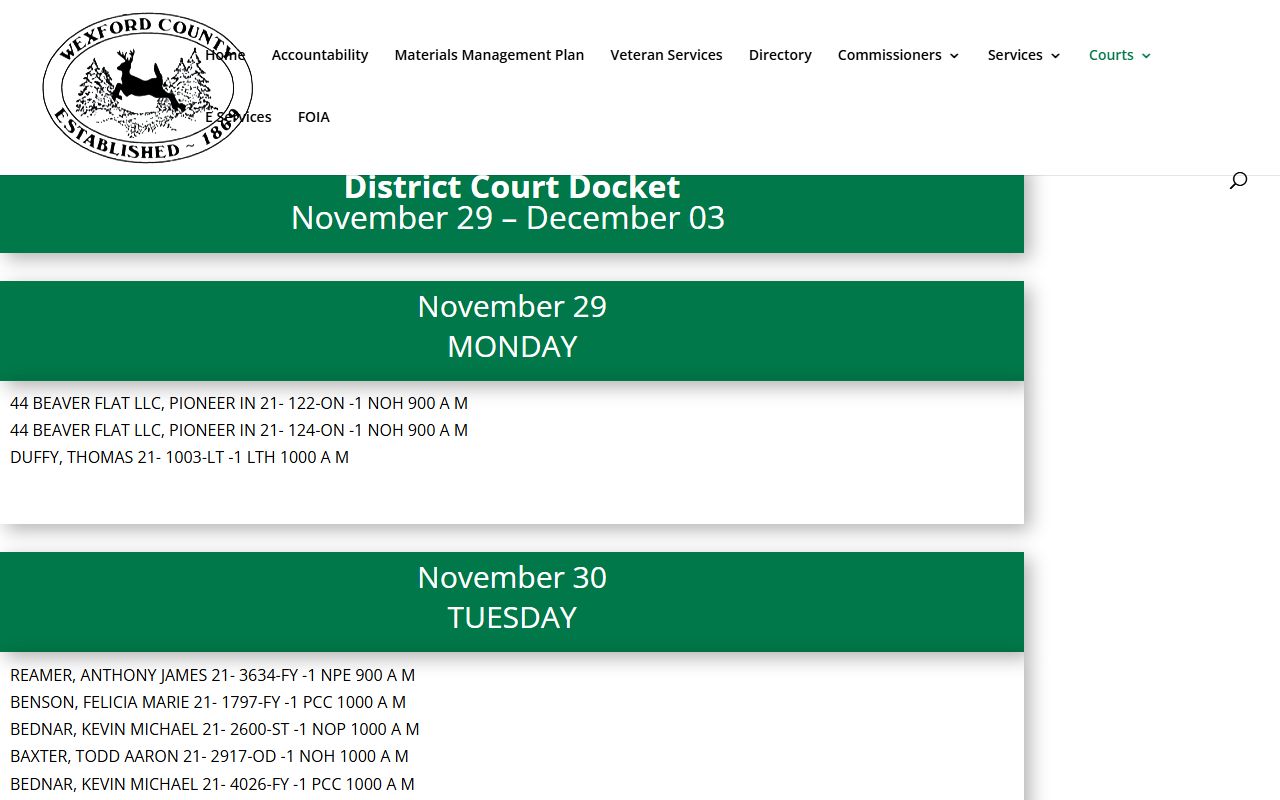
Because no document downloads or financial balances appear on that page, the District docket is best used to confirm hearing dates rather than to pull records.
Case-Type and Hearing Codes on the Docket
The hardest part of reading the District docket is the abbreviations. The court prints case-type codes to sort matters by category and hearing codes to name each event. These codes follow Michigan case-type conventions, but the public docket page does not include a key. Because the court itself does not publish a definition for each one, guessing at their meaning risks reading the schedule wrong.
Codes seen on the Wexford District docket, undefined by the court. Case-type codes observed include FY, FD, SM, SD, ST, SI, OT, OD, ON, LT, and GC. Hearing and event codes observed include PCC, NPE, NOP, NOH, FPT, R, NOPS, NOS, OSC, PVH, PVO, NOA, NFR, NOF, and CDS. The official page does not spell any of these out, so confirm the meaning of a code with the court before relying on it.
The probate and family docket uses its own set of case letters, such as DD, CA, CY, TV, GM, GL, DL, DM, and DC. Unlike the District list, that docket pairs many entries with a written hearing description, which makes the schedule easier to follow even without a code key.
Probate and Family Dockets in Wexford County
The Wexford County Probate Court and the 28th Circuit Court Family Division keep their own hearing calendar. Thursdays are the court's dedicated probate docket day. Rather than a string of raw codes, the probate and family docket usually spells out each hearing, which helps the public read it. The field inventory below reflects what that docket displays.
| Field | What It Shows |
|---|---|
| Date and time | When the hearing is scheduled to be called. |
| Case number and suffix | The case identifier and a code such as GM, DM, or CA. |
| Party name or names | The individuals involved, unless the entry is protected. |
| Attorney or representative | Counsel or a representative tied to the matter, when listed. |
| Hearing description | Plain text such as "petition to appoint conservator" or "minor guardianship review." |
| Nonpublic label | A "NON-PUBLIC" marker on protected family, juvenile, or mental-health entries. |
You can view the layout on the county's Probate and Family Court docket sample page.
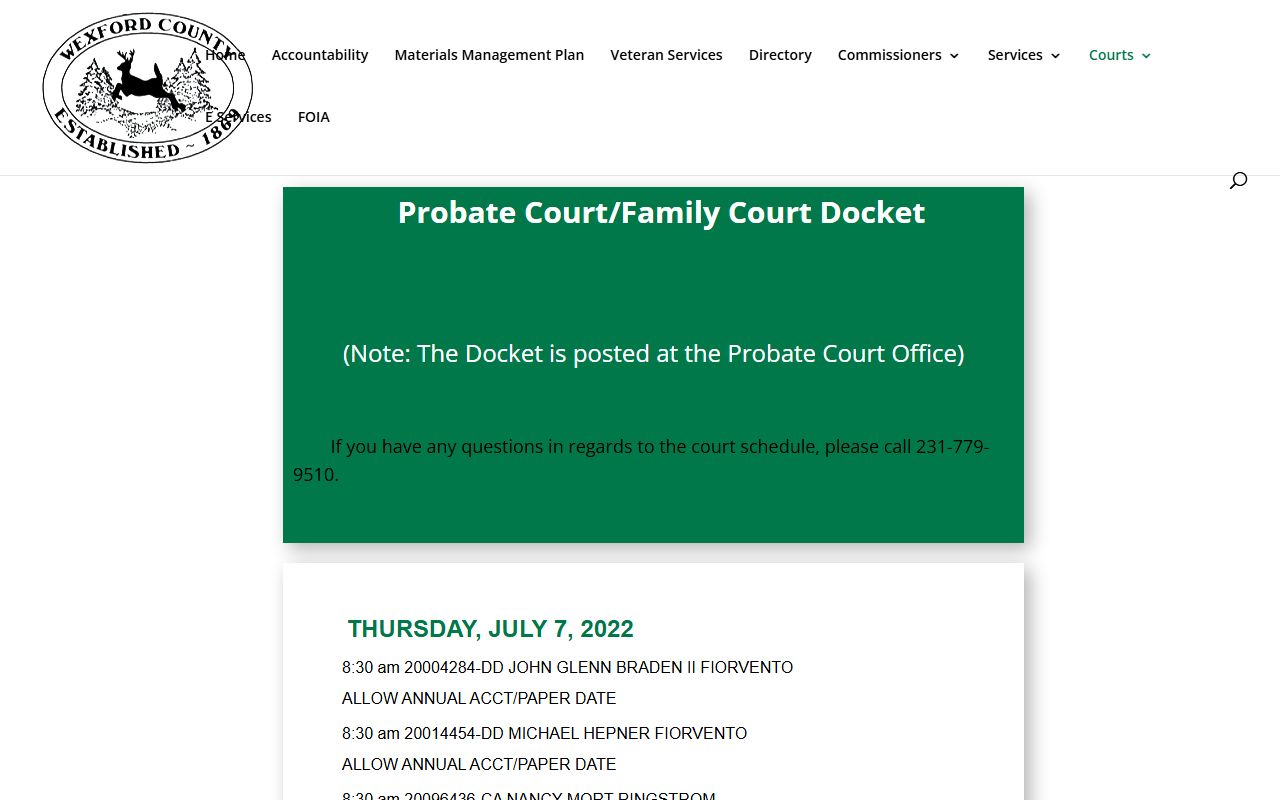
Hearing descriptions there range from annual account dates and guardianship reviews to half-day divorce bench trials, so the probate docket doubles as a plain-language guide to the day's family matters.
Public and Nonpublic Docket Entries
Not every case that is scheduled is open to the public. The probate and family docket labels certain lines "NON-PUBLIC," and one line simply reads "NON-PUBLIC" with no further detail. That marker signals a matter the court is required to shield. Michigan Court Rules limit online access to some case images and mark whole categories as confidential, so the docket shows the boundary between what the public may view and what stays sealed.
- Juvenile delinquency and child neglect or abuse matters.
- Adoption cases and related family filings.
- Certain mental-health and involuntary-treatment proceedings.
- Family Division entries flagged confidential under court rule.
The rules that govern this access are set out in Chapter 1 of the Michigan Court Rules.
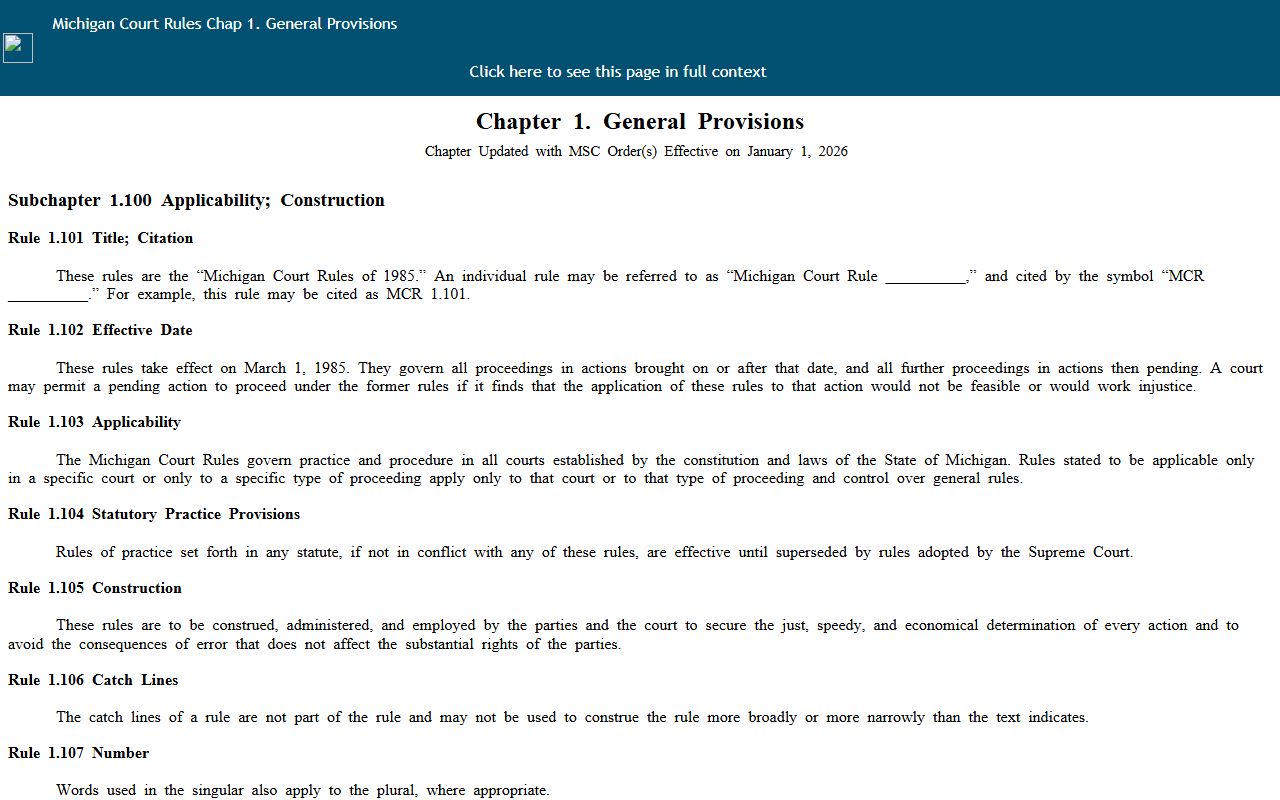
Those rules explain why a Wexford County docket can show a hearing time while hiding the party name, and why some proceedings never appear on the public calendar at all.
Note: A "NON-PUBLIC" entry means the court is protecting the matter by law, so calling to ask for the sealed detail will not open it.
Courts That Publish Dockets in Wexford County
Three local courts share the courthouse in Cadillac, and each handles a different slice of the docket. The 28th Circuit Court is a multi-county circuit with Missaukee County, so its judges travel between Cadillac and Lake City. Knowing which court owns a case tells you which calendar to read and which office to call about scheduling.
- 28th Circuit Court, which handles felonies, civil claims over $25,000, family division cases, and appeals.
- 84th District Court, which handles misdemeanors, felony preliminary stages, civil claims under $25,000, small claims, landlord-tenant, and traffic.
- Wexford County Probate Court, which handles estates, trusts, guardianships, conservatorships, and mental-health matters.
Federal cases involving Wexford County residents fall outside these local calendars and route through the federal system instead. For those, a docket tool such as CourtListener gathers filings from federal courts.
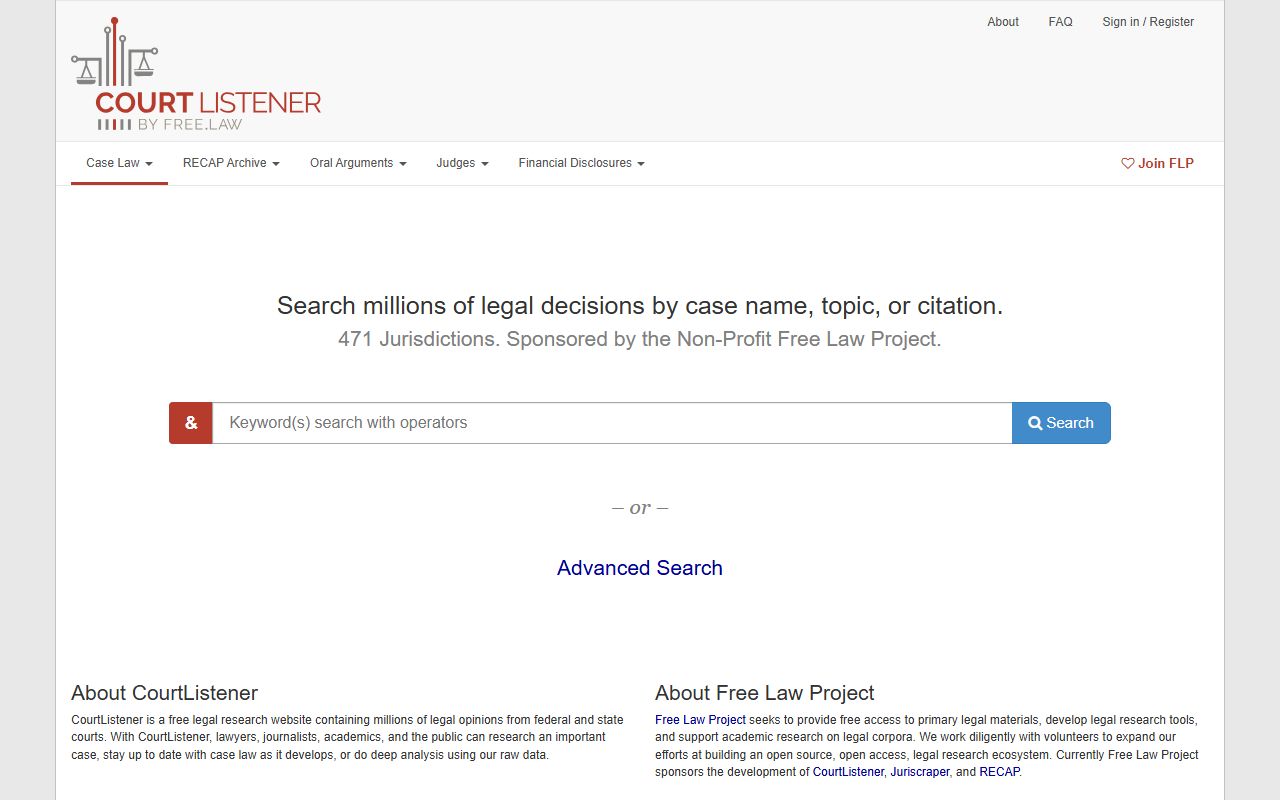
CourtListener covers federal dockets rather than the county trial courts, so it complements MiCOURT when a Wexford County matter has moved to a federal court.
Docket vs. Full Case Record
The docket and the full case record answer different questions. The docket is a fast index of events, while the case file holds the documents behind those events. For the full pleadings, orders, and case history, the complete file lives with the court, and broader guidance sits on the Wexford County court records page. The comparison below shows when each one is the right tool.
| Docket | Full Case Record | |
|---|---|---|
| Format | List of dated entries and hearings | Complaints, motions, orders, and judgments |
| Access | Often viewable online through MiCOURT or a posted calendar | May require a clerk visit, request, or fee |
| Use | Track hearing dates and case progress | Legal review, evidence, certified copies |
For a felony that has moved from District Court up to the Circuit Court, the sentencing and disposition detail lives in the case file rather than the docket, which the Wexford County criminal court records page covers in depth.
Typical Hearing Days in Wexford County Courts
The local courts run several hearing types on a predictable weekly rhythm. Knowing the pattern helps you read a docket and pick the right day to visit or call. Felony matters cluster on Tuesdays, probate on Thursdays, and traffic hearings split between Monday and Thursday.
- Monday afternoons, traffic informal hearings before the magistrate.
- Tuesday at 10:00 a.m., felony probable cause conferences, held off the record.
- Tuesday at 2:00 p.m., felony preliminary examinations.
- Around 1:30 p.m. daily, video arraignments, subject to the schedule.
- Thursdays, the probate docket and traffic formal hearings before the judge.
Jury service across the 28th Circuit, 84th District, and Probate Courts runs on a two-month term, and Wexford uses a telephone call-in system to tell jurors whether they are needed. When a trial date is set, it lands on the docket like any other event.
Because a calendar can change, confirm a hearing before you drive to Cadillac. Questions about the probate schedule go to the Probate Court office, and District matters go to the district court office.
Note: A posted docket reflects the schedule at the time it was printed, so a case can be added, moved, or adjourned after the calendar goes up.